Socotra
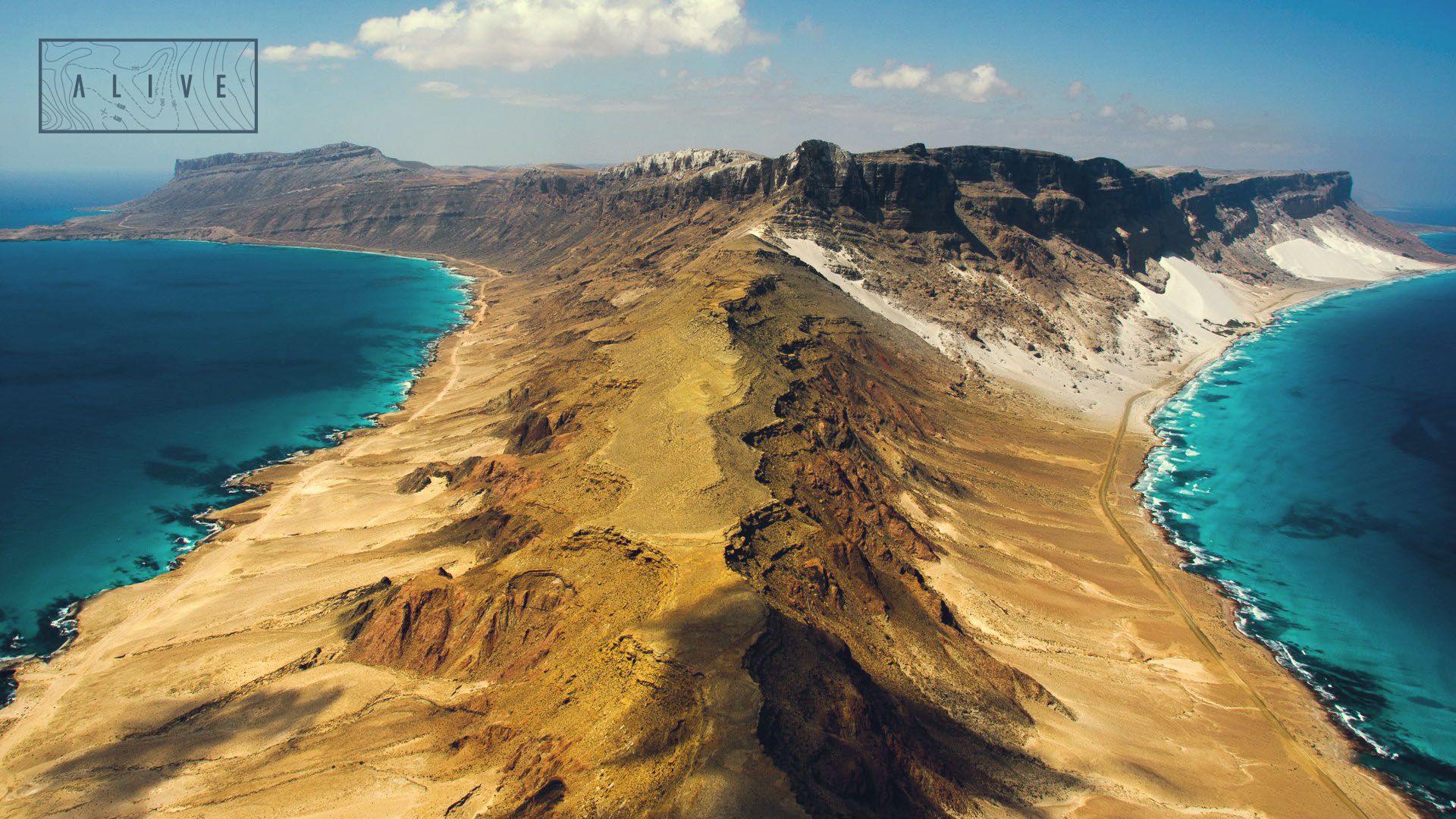
In the heart of the Indian Ocean lies the island of Socotra, the strangest place on Earth, where trees resembling giant umbrellas rest and creatures live that exist nowhere else. An area of about 3,796 km², with 37% of its plants and animals strictly endemic, found nowhere else.
Socotra in Numbers
An open living museum of natural uniqueness, where millions of years of isolation created an ecosystem without parallel.
It is not merely an island but an open living museum of natural uniqueness, where millions of years of geographical isolation created an ecosystem without parallel. In 2008 Socotra was inscribed on the UNESCO World Heritage List in recognition of its exceptional biodiversity and global scientific importance.
Dragon Blood Tree
Dracaena cinnabari — Socotra’s eternal symbol
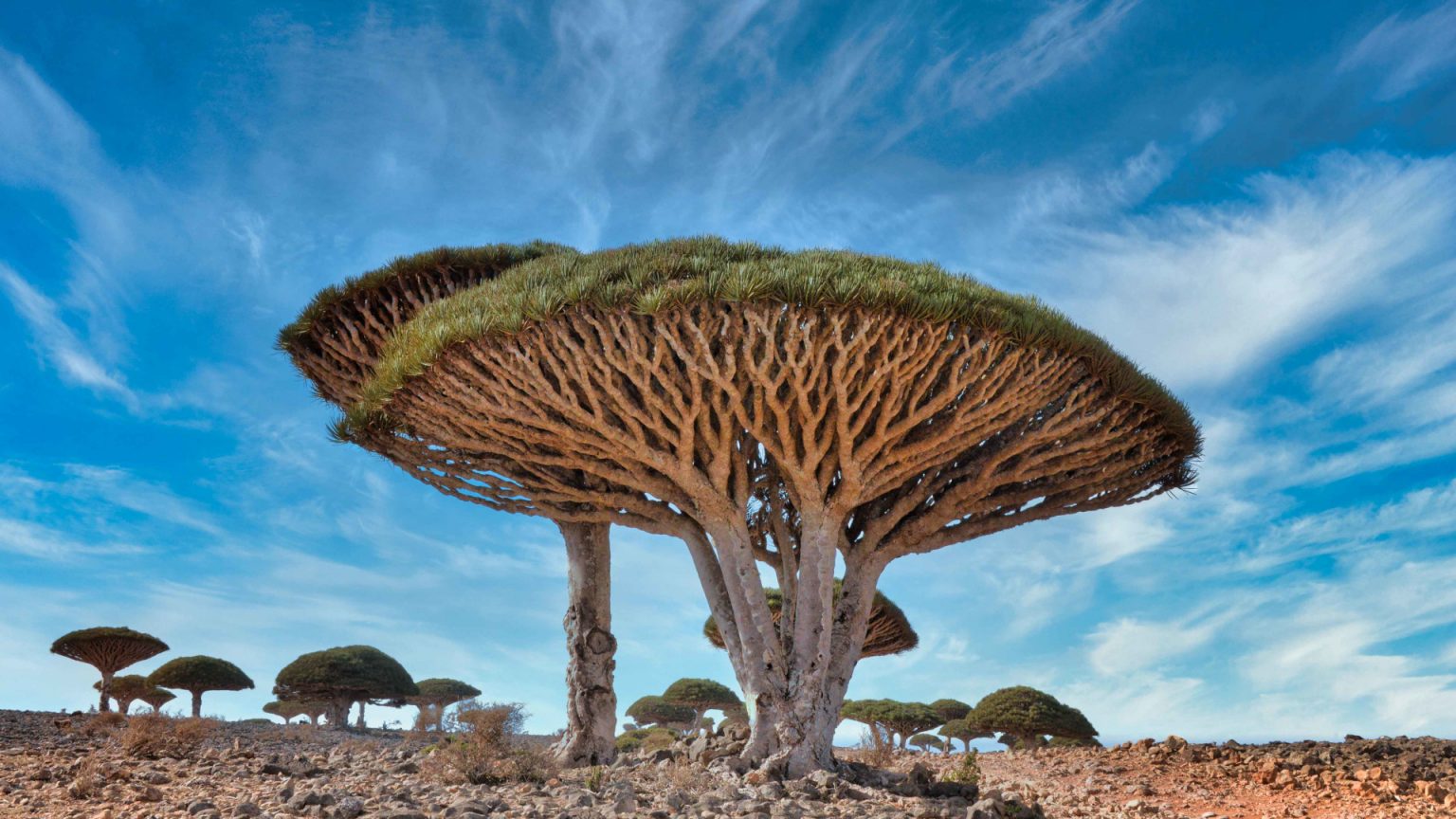
Some trees live over 800 years, with origins dating back more than 50 million years. It is a living fossil from the age of dinosaurs.
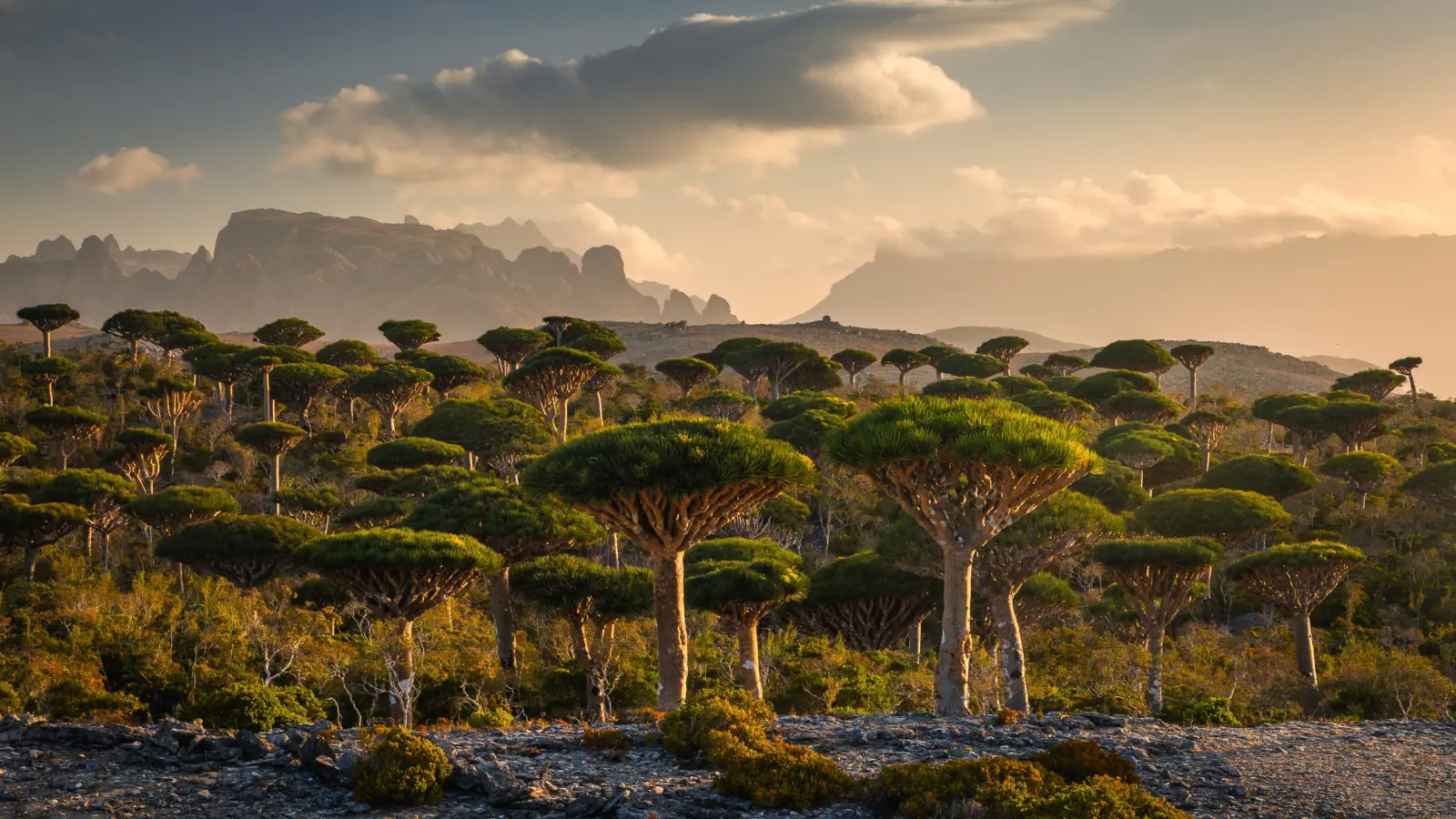
Distinguished by branches spreading like a giant umbrella and a unique geometric structure that resists drought and gathers dew. It grows in the mountain and central plateau regions at altitudes between 300 and 1,500 metres above sea level.
A blood-red resin is extracted from its bark, used in ancient times in medicine and embalming, and today in paints and medicines.
It is pollinated by the endemic Socotran woodpecker, a unique symbiotic relationship found nowhere else. Classified among strictly endemic species that grow only in their native habitat.
The Naming Story and Legend
The authentic Arabic name
Dragon blood tree is the authentic Arabic name, also known as “phoenix blood” or “dragon’s blood tree”. The local Socotri name is “arhib”.
The ancient legend
The local legend tells that the tree grew from the blood of the brothers Abel and Cain after the first murder in history. Another version tells of a battle between a dragon and an elephant whose blood gave rise to the tree.
A witness to history
This living fossil dates back more than 50 million years, making it a living witness to the ancient geological history of the earth.
Rare Species
Living treasures found only in Socotra
Tourist Areas
Wonders of nature that delight the eyes
Wadi Arher
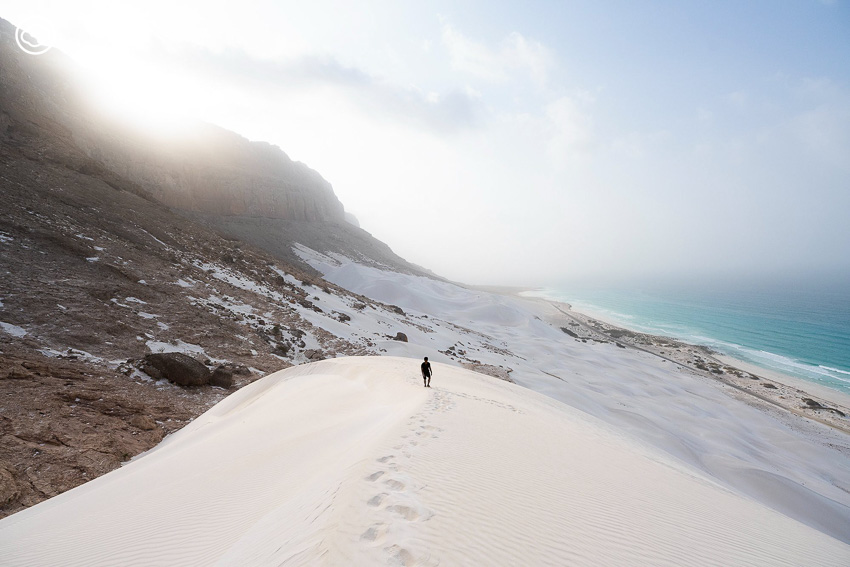
Socotra’s most famous valley, uniting white sandy beaches and clear turquoise waters, one of the most beautiful natural sites of the island. Distinguished by its soft sands and warm waters, an ideal destination for swimming and relaxation.
Diksam Plateau
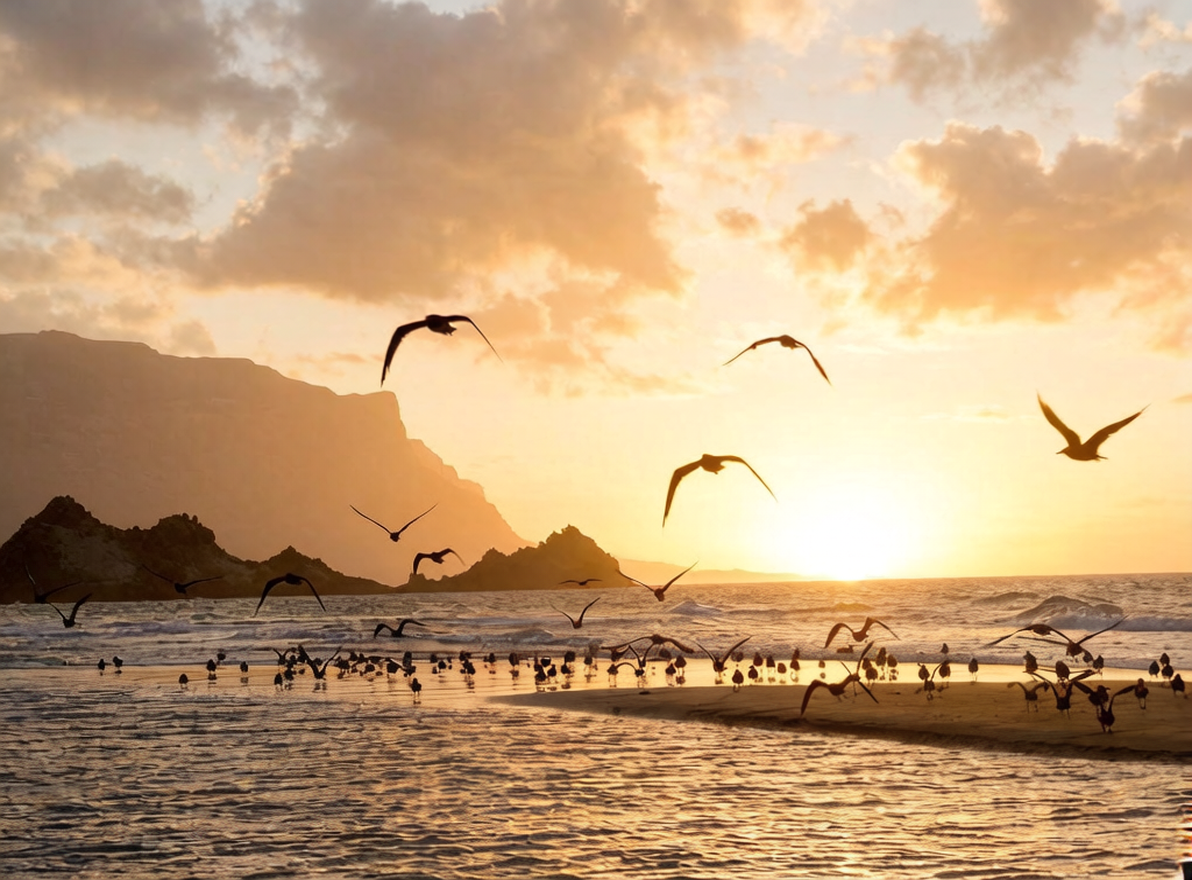
A lofty mountain plateau overlooking the ocean, distinguished by dense gatherings of dragon blood trees (arhib) and marvellous scenery. Offering a panoramic view of the island and ocean, considered one of the best places to watch the sunset.
Shuab Beach
One of the most beautiful beaches with golden sands and turquoise waters, an ideal destination for relaxation and swimming, distinguished by its tranquillity and clear waters — perfect for families.
Unique rock formations
Unique column-like rock formations shaped by erosion over millions of years, creating a dramatic scene found nowhere else, a favourite destination for photographers and adventurers.
Traditional fishing village
A traditional coastal fishing village reflecting the authentic marine life and inherited traditions of the island’s people, where visitors can see traditional fishing boats and ancient fishing methods.
Jabal Hajhir peaks
Socotra’s highest peak (about 1,525 metres), offering panoramic views and unique biodiversity, home to many endemic plants with excellent trails for hiking and climbing enthusiasts.
Socotra Gallery
Moments from Socotra’s eternal beauty