The Expanded Narrative
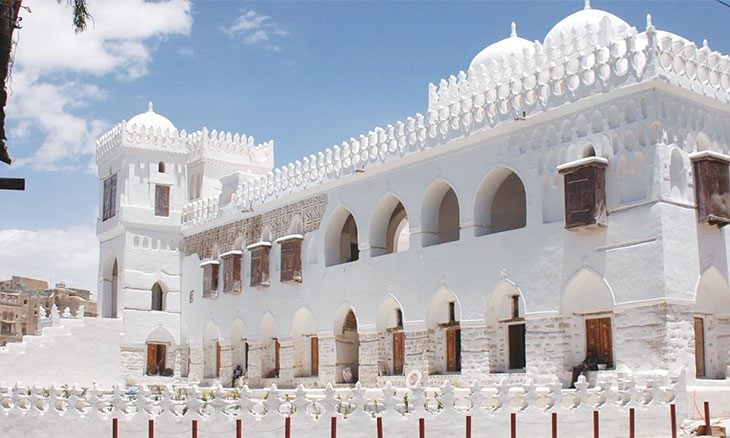
Encompasses the historic quarters and souqs of old Rada’a, retaining its traditional Islamic layout and distinctive stone houses.
The historic fabric of the capital
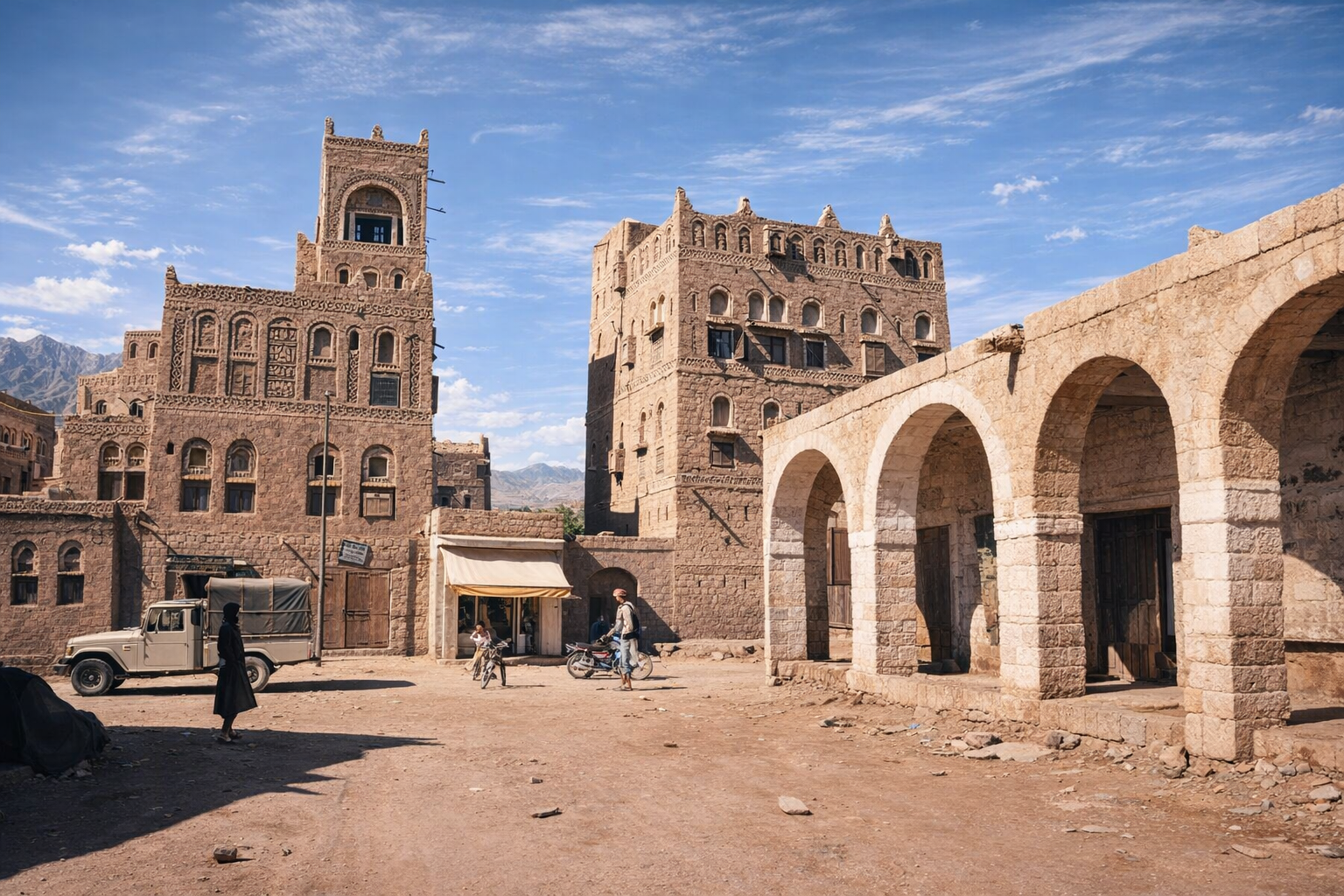
The old city of Rada’a includes the residential quarters and historic souqs that grew within the walls. It retains the traditional Yemeni style of architecture, with narrow winding alleys and adjoining stone houses with small windows. The city’s layout reflected the social structure, with similar crafts gathered in dedicated souqs.
Components of the city
- Specialised historic souqs (e.g. the coppersmiths’ souq, the qat souq, the grain souq).
- Numerous historic mosques and zawiyas besides the Amiriya Madrasa.
- Traditional stone houses with inner courtyards.
- Alleys sometimes roofed (sawabit) to shelter passers-by from sun and rain.
- Public squares once used for gatherings and meetings.
The value of urban heritage
The old city is a living storehouse of tangible and social heritage. It is a model of the Islamic city in the Yemeni highlands, adapting to the mountain environment and climate, where residence, learning, trade and worship meet in an organic urban fabric.
Specialised historic souqsRoofed alleys (sawabit)Adjoining stone houses with courtyardsA model of the Islamic city in the highlands