The Expanded Narrative
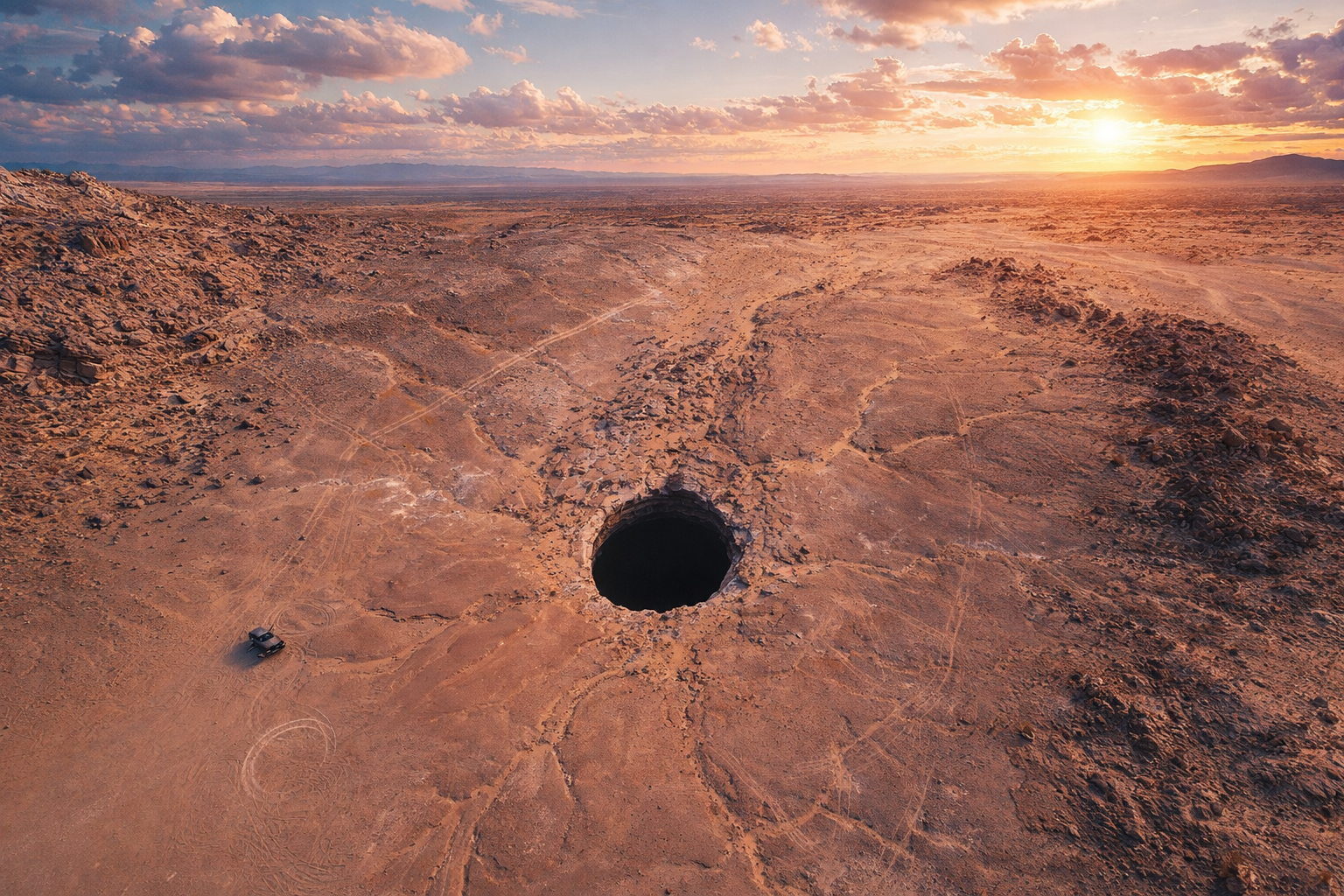
In the far east, where the wastes stretch forbiddingly and sounds fade until they vanish, a deep crater opens in the earth known as the Well of Barhout.
The bottom of hell
In the far east, where the wastes stretch forbiddingly and sounds fade until they vanish, a deep crater opens in the earth known as the Well of Barhout — a black abyss as if cut from an eternal darkness, its depth swallowing light while a silent dread settles in its bottom whose end is unknown.
The legacy of fear
- People passed down tales of a place where evil spirits are imprisoned and breath is constricted.
- Suffocating odours were said to rise from the well’s mouth on certain nights, fuelling the stories.
- Its name has been linked across the centuries to doom and loss, so approaching it became a cause for dread.
- Folk tales gathered around it until it became part of the region’s collective memory.
The descent that deepened the mystery
In modern times, a team of Omani cavers descended to the bottom equipped with ropes and recording instruments, documenting falling water, strange rock formations and animal remains, and announcing that what lies at the bottom is no more than natural phenomena. Yet this testimony, however clear, did not quench the flame of doubt; rather it strengthened the legend, as the depth remained a place of awe untouched by reassurance.
A station of awe
Thus the Well of Barhout remains standing, a landmark that stirs fear before curiosity, a place where geology and tales intersect, where solid facts sit beside inherited imagination, and the name stays engraved in memory as a symbol of a bottomless abyss.