The Expanded Narrative
An ingenious water-harvesting system built in pre-Islamic times to protect the city from floods and secure its water supply.
Historical value
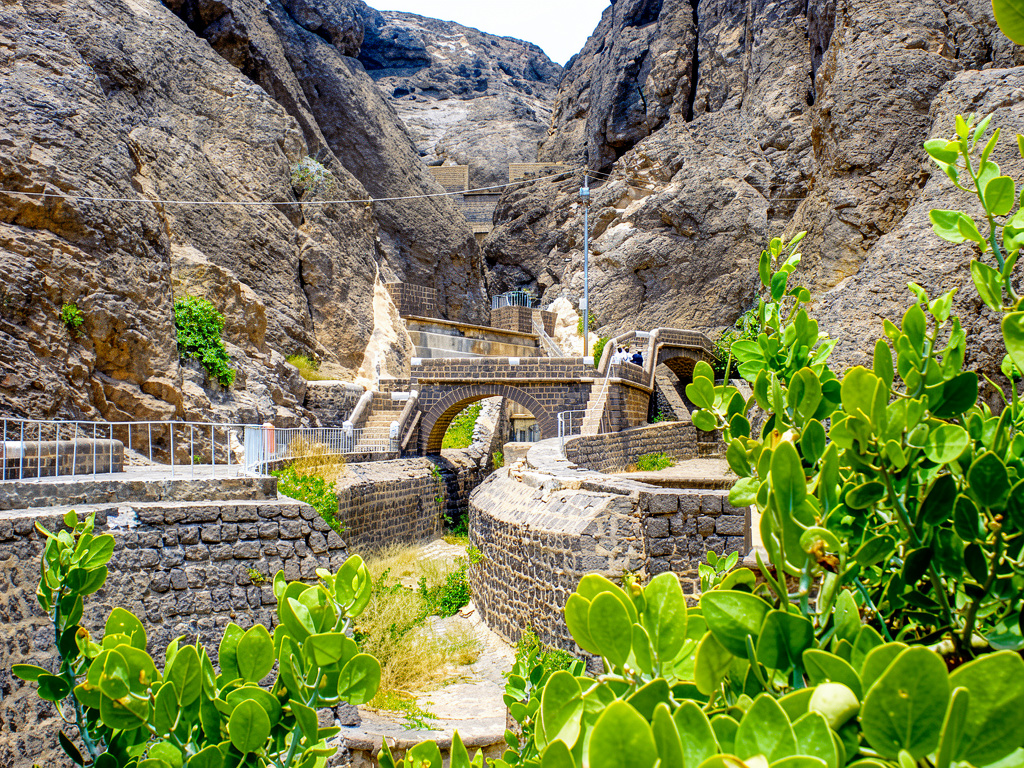
The Tawila Tanks are among Aden’s most prominent historical landmarks and the greatest evidence of ancient Yemen’s water engineering. Their construction dates to remote antiquity, possibly the era of the Kingdom of Awsan (before the 7th century BCE), with additions and repairs in successive Islamic periods, especially the Ayyubid era. This remarkable engineering system was built in Wadi Tawila below the Aden plateau to protect the city from destructive floods and store water for times of drought.
Architectural and engineering description
- A series of stepped stone tanks connected by drainage channels.
- Built of huge granite blocks following the natural terrain of the wadi.
- Designed to capture rainwater flowing from the heights around Crater.
- Originally numbered up to 55 tanks; only 18 remain clearly visible.
- Notable for the precision of water distribution and for preventing evaporation and siltation.
Visitor information
- Best time to visit: the morning or before sunset to avoid the heat.
- The site is open to visitors; comfortable walking shoes are recommended.
- Most tanks can be seen from designated paths — follow the safety instructions.
- Interpretive signs are available in Arabic and English.
Dating to remote antiquity, possibly the era of the Kingdom of AwsanOriginally up to 55 tanks; 18 remainBuilt to protect the city from floods and store waterBuilt of huge granite blocks