The Expanded Narrative
Bab Musa and al-Bab al-Kabir were among the most important historic gates of Taiz within the old city wall, built to protect the city and organise the entry and exit of caravans and merchants.
A historical glance
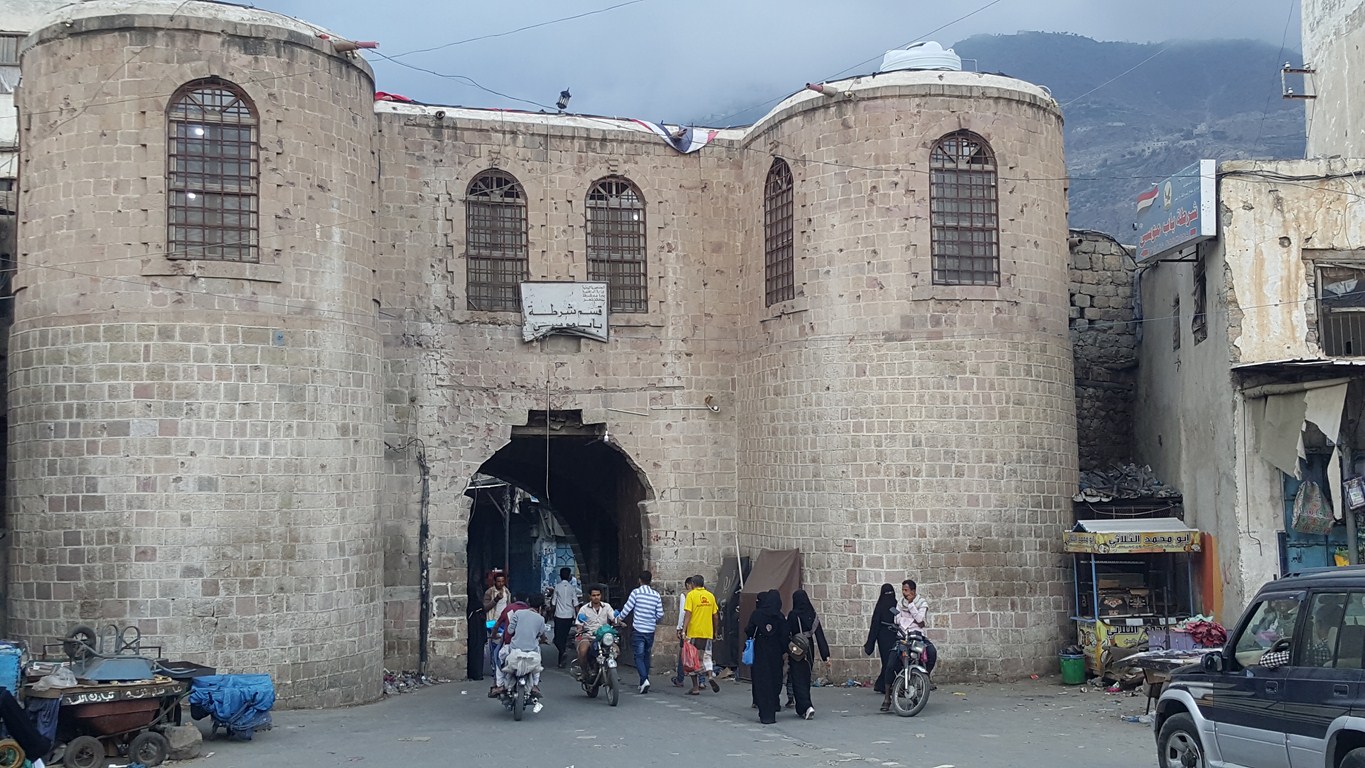
Bab Musa and al-Bab al-Kabir were among the most important historic gates of Taiz within the old city wall, built to protect the city and organise the entry and exit of caravans and merchants. Bab Musa is one of the main western gates, while al-Bab al-Kabir (the eastern gate) is the city’s main entrance from the east. Both were part of a defensive and commercial system from the Rasulid and Ottoman eras to modern times.
Naming and identity
Bab Musa was named after the judge Sheikh Musa ibn Ahmad ibn Ujayl, who held the judiciary in Taiz during the Rasulid era, lived there until his death and was buried near the gate’s site; traces of his tomb remain close by, cementing the gate’s name in the city’s memory.
Construction and architecture
Bab Musa is an archaeological gate of traditional architectural character linked to the old city walls around Taiz’s historic centre. Originally narrow and winding, it was widened under the Ottoman governors, especially by Governor Mahmud Pasha in the ninth century AH, to accommodate carts and camels, using qadad stone in its construction.
The gate’s roles through time
The gate was an essential part of the city’s defences, closed at night and opened by day, controlling the movement of people and trade. Besides its military role, the place was linked from ancient times to popular and commercial heritage, with traditional souqs and bazaars growing around it.
Current state and restoration
Over the centuries of wars and neglect, parts of the gate and city walls eroded, and some sections collapsed due to neglect and lack of organised maintenance. Local efforts and earlier cooperation with international specialists seek to restore it and preserve it as a centre of popular and cultural heritage in the governorate.
Cultural and heritage importance
Bab Musa and al-Bab al-Kabir remain symbols of the old city of Taiz, embodying a historical memory of the city’s life in the medieval, Ottoman and modern eras, as links between the city centre and its commercial and agricultural surroundings.