The Expanded Narrative
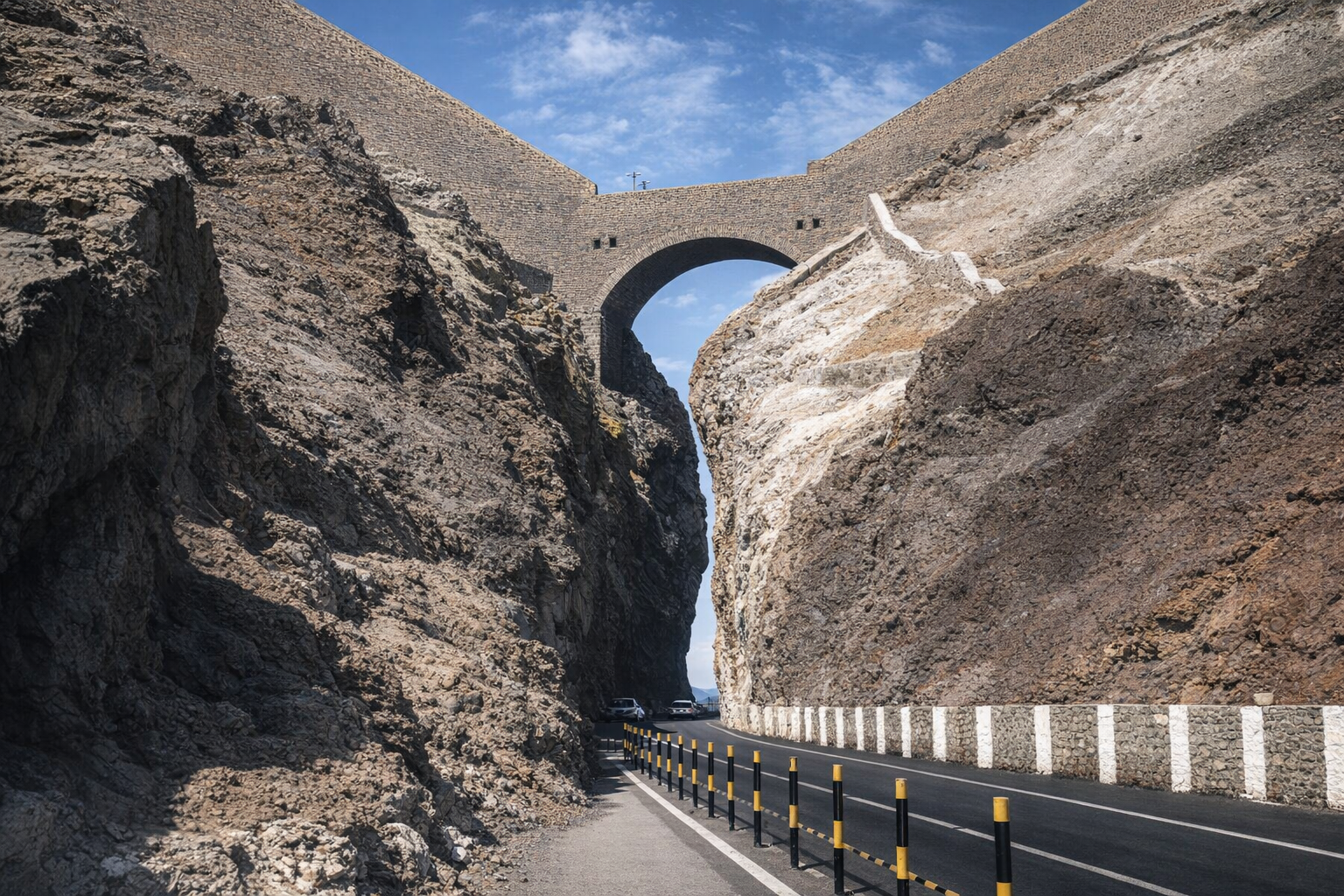
The rock-hewn gateway that was the main land entrance to the fortified city of Crater.
Defensive and historical value
The Aden Gate, also known as al-Aqaba, was the main — and almost only — outer land gate through which caravans, traders and visitors entered the fortified city of Crater within the volcanic bowl. Its construction dates to the early Islamic period, with significant reinforcement in the Ayyubid era (12th century). The gate was closed at sunset and opened at sunrise, with strict guards controlling entry and exit and collecting taxes on goods. It was later widened and partially demolished to accommodate motor traffic.
Architectural description
- A massive gate carved into a natural block of granite.
- A wide arched passage sufficient for a camel caravan.
- Once topped by guard rooms and openings for projectiles.
- Protected by steep rock slopes on both sides.
- Connected the foot of Jabal Shamsan with the now-vanished city walls.
Visitor information
- Located at the start of the road leading from the outer areas into Crater.
- Clearly visible when driving up or down from Crater.
- Only the basic rock opening remains after the road widening.
- An ideal starting point for understanding Aden’s historic defensive geography.
The main, almost only, land entrance to CraterCarved into a block of graniteClosed at sunset and opened at sunriseReinforced in the Ayyubid era (12th century)